Loving Strangers
Give Me Your Sentences

The day after sleet fell on the city, the schools and the university were closed even though the roads were mostly drivable. I went to my office in the morning to see a client and the city was still wearing the remnants of its snow day self. There were people out, but not many. The only thing between my office and the raised freeway is the feeder road, so on normal days the roar of traffic is a constant. But on this day I could hear the two clocks in my office ticking. I had never registered their ticking before. During the rare times when I’m at home by myself, I like to listen to the faint crush of my clothing moving against itself. Like the ticking, it’s a sound that’s always there but that I rarely have access to. An ongoing life beneath the surface of my own life. The pleasure of being able to hear that quiet action is in short supply with the kids, but I try not to pine for it too greedily, because I know their noise is short lived and that once it’s gone, it will always be gone.
I thought about this cliché, the bewildering brevity of childhood, when I read a newsletter my friend publishes. She writes about her kid’s elementary years in it, the “all-encompassing world” of “their cherub faces and sweet elementary school with its garden and oak-canopied playground”. Jonelle’s kids are about a decade older than mine, but they went to the same elementary school that my kids are in, which is slated to close next year. It’s a miniature tragedy for me, though one that has been easy to keep in perspective, given that there are kids who are not leaving their homes right now for fear of being “detained”. Detained is such a polite word for a catastrophe. Still, acceptance has been prickly. The school’s closure has been a little tear in the cocoon of their childhood. It’s let the future pour in, with its inevitable fickleness.
In the piece, Jonelle recounts her daughter participating in what the district calls a ‘grad walk’, when graduating seniors get to visit their former elementary schools. It’s a ritual that won’t be possible for her son. My own son enthusiastically reported on the seniors visiting when he was in kindergarten, and imagined doing the same when he was 18. He had a funny look on his face when he was telling me about it. He seemed to already be tasting the strangeness of life, the uncanny growing out of things that feel like they are you: your body, your tastes, your elementary school. Jonelle sums up the loss as the world (gently) saying, “I hold no responsibility to keep records for you”. This was one of those sentences I read with relief; it took hold of something that I’d long perseverated over, which meant that I could let go of it.
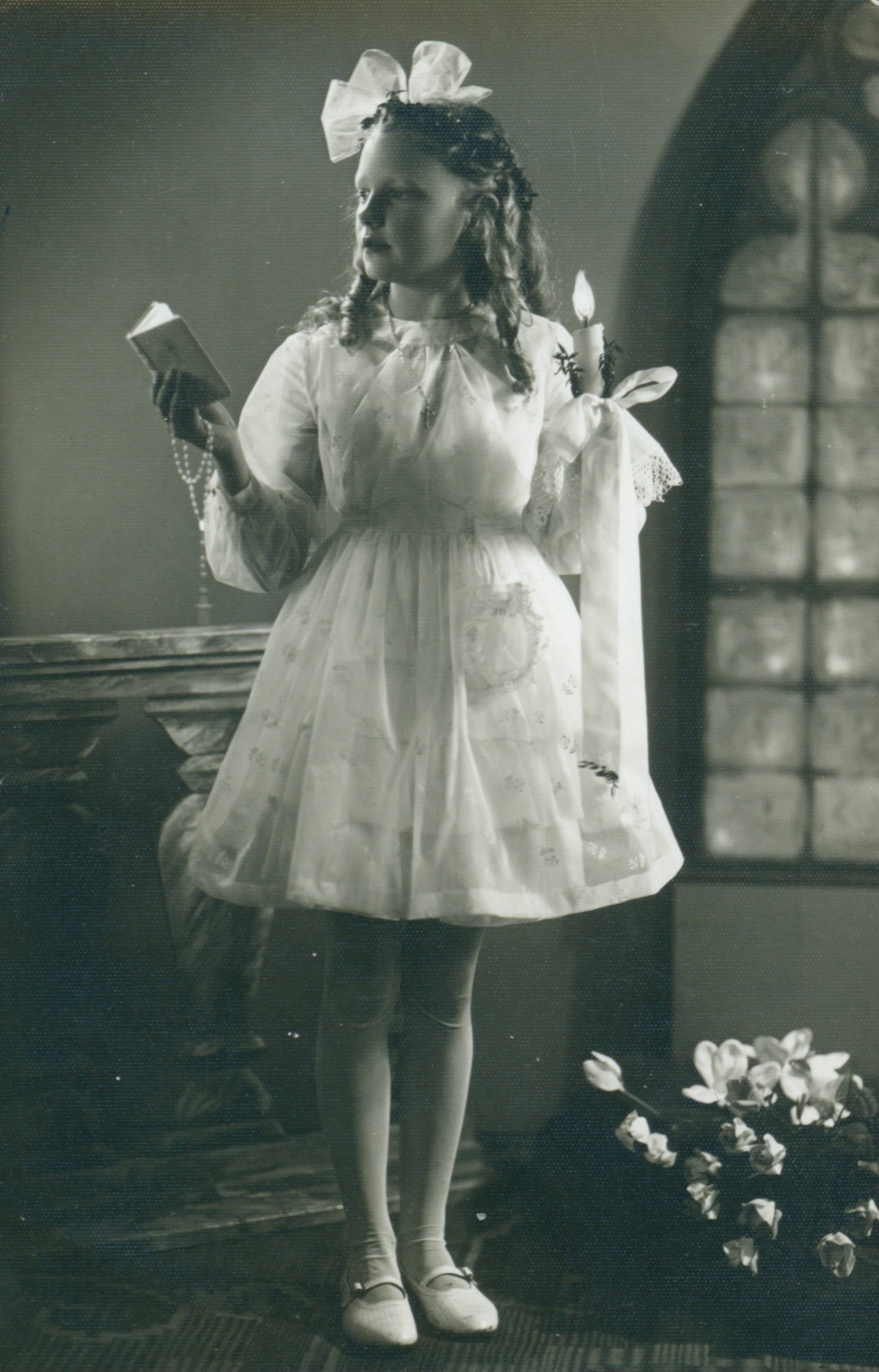
I was surprised when I read the piece again a week later to find that I’d been misremembering it. I’d unknowingly edited it to make it mine, “the world holds no responsibility to keep my memories for me”. It’s this that I’ve spent years worrying over, the fact that the places I’ve left are oblivious to fidelity. In my absence, they go on to be the landscape for other lives and change themselves freely, with no account for the memories I’ve embedded in their details. I’ve felt both grief and guilt on this count. I’ve often wished that my grandmother’s apartment could persist indefinitely as I remember it. That I could enter it at whim and see the polyester, red gingham curtains in her kitchen and the framed picture of my mom at her first communion, pale eyed and seemingly from a different century. But that would mean a living part of the world would be given over to the past, rendered unable to deliver profit or shelter to the present.
Reading that line Jonelle wrote gave me a little incantation to recite to myself when this puzzle arises. It’s sad but she describes it as a lovely sadness, like that of a bird whose tree has been cut down, “a rageless sadness, and an expansive one, quiet, as long as it needs to be, and without resignation”.
The night after I read Jonelle’s newsletter I had a dream about the building our first apartment in the states was in. We always refer to that apartment by the street it was on, Purdue, which I still pronounce with the elongated vowels of Mommy’s Polish accent because I didn’t see the name written down until I was in my twenties. My memory of Purdue is always yellow, which is a good thing. Yellow is my favorite color. There’s something pivotal about those years and I don’t know what it is. They were the first years that I knew Mommy as a working woman with a car. They were the years that clothing and Mommy’s heels came to life for me. It was also on Purdue that my grandmother visited us for the first time. So it was there that I first witnessed the alchemy of sewing, the making of three dimensional things from flat cloth.
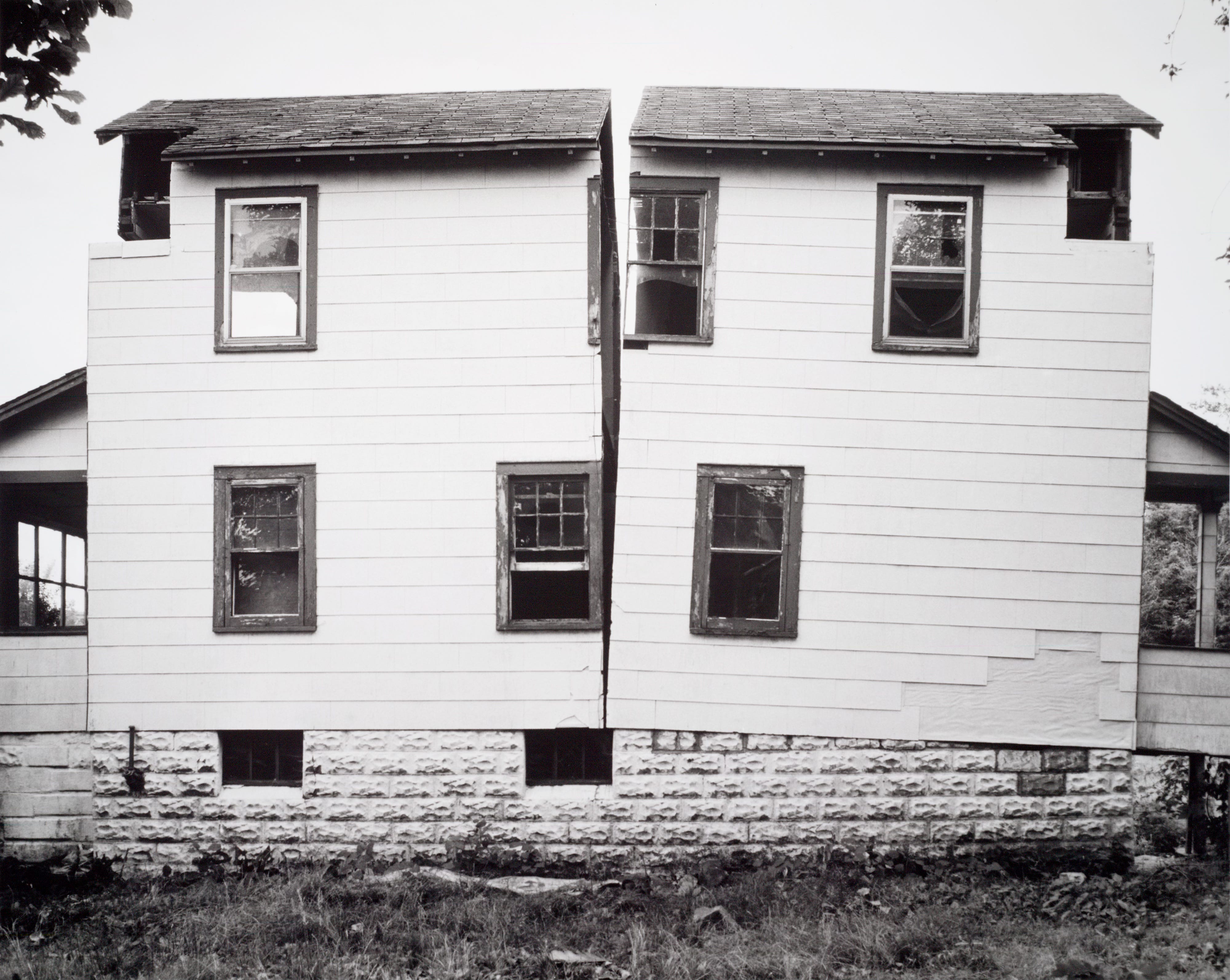
In the dream, the side wall of the brick building had cleaved from the rest of the walls and leaned away at the top, forming a dark crack like one of those houses Gordon Matta- Clark sawed in half in the seventies. The roof had slid in the same direction as the leaning wall, and it was perched at an angle on top of the building, in the way of french berets worn for fashion in the 1980s. Then, all at once, the roof slid off the building. It was over. The place was destroyed. For the rest of the dream I walked through the rooms we used to live in, though they looked nothing like they did in life, telling Shane stories about this time and that (all fabricated by my mind for the purpose of the dream). I was heartbroken, full of living sadness. There were investors walking around the building, men, eyeing it for its potential value, and none of them cared about my sadness. It felt tragic. When I woke up I wrote everything down feverishly, certain that the dream was worth recounting. No amount of disappointment in the recounting of dreams can dampen the enthusiasm one feels on waking from a vivid dream. In that moment, it feels certain that the experience can be successfully imparted to another person.
That night, as I was blearily taking notes in my phone, I was particularly jazzed about the prospect of describing the dream in writing. The same day I read Jonelle’s piece, I’d seen a quote from a Joan Didion interview posted on Substack. It was about writing being a hostile act. I found the interview on the web because I was intrigued, and because I was already in disagreement. The quote from Substack is right at the top. Writing, she says, is “hostile in that you’re trying to make somebody see something the way you see it, trying to impose your idea, your picture. It’s hostile to try to wrench around someone else’s mind that way. Quite often you want to tell somebody your dream, your nightmare. Well, no one wants to hear about someone else’s dream, good or bad; nobody wants to walk around with it. The writer is always tricking the reader into listening to the dream.” In my middle of the night delusion, I remembered the quote and got excited about the challenge. I felt sure I could make people want to listen to the dream.
I was wrong, of course. Even if I’d been able to make sense of my notes, which were cryptic, Didion was unequivocally right about the dream part. No one wants to hear about your dream. The glazed look that comes into my husband’s eyes when I start sharing a dream is unmistakable. It’s like he goes into a waiting room in his mind, bides time until my imposition has run his course and he can be released into his own thoughts again.
The Didion interview goes on into her experience of writing, about how the process moves from possibility to specificity. She talks about how, within the first few sentences, the story starts to narrow. At the start there’s always the wish for a perfect work, one that can “turn every color” and “be the world”, but… “ten pages in, I’ve already blown it, limited it, made it less, marred it.” She proceeds anyway, and hangs her hat on a future book which will somehow accomplish what every prior process failed to accomplish. I know about this from making things. When I’m making a sculpture or a dance, I’m confronted with this disappointment immediately. Imagining and making are as different as night thinking and day thinking. Imagining has the wholeness of a dream, the same wedding of form and emotion. It’s a glow. But then I have to separate the glow into discrete shapes, decide where to put the seams. It dissipates as hurriedly as the urgency of my dream does when I see my husband’s eyes retreat to his waiting room.
I felt the same relief reading Didion’s description of writing a book that I felt when I read ‘the world refuses to keep my memories for me’ in Jonelle’s newsletter. I’ve revised the line again it turns out, added the word ‘refuses’. I might be a bit more resentful about the world’s failure than Jonelle is. It doesn’t feel gentle, this not-keeping. It feels like a refusal.
Later in the Didion interview she talks about the work of writing a plot line into a book once it’s nearly finished. She describes it as pulling a thread through, and then later like setting a sleeve. Something that has to be done with the fingers. She asks the interviewer if she sews, and since then I’ve been asking the internet if Joan Didion sewed. She did. I was thrilled when I read the line about setting a sleeve, as we always are when we recognize ourselves outside ourselves. Setting a sleeve is one of those sewing skills that belongs to the body. The problem of sleeve ease cannot be dispatched with neat instructions. Experience is required, futzing, struggle. Then your fingers learn it and you start to love setting a sleeve because the act contains your special sorcery, your knowing.
The world might refuse to keep my memories for me, but at least there are other minds holding onto my thoughts for me. It’s a special kind of salve, when someone puts your experience into language. It can make things leave you be. When I was a kid I read a book about a nuclear armageddon. I was always scared of things ending and so I made myself read books about things ending. It was very uncomfortable. In the book those who survived would enter spaces of the former world that were intact but abandoned. There was a scene in a library. All the books were still on the shelves, but they would disintegrate as soon as you touched them. That library is what the space of effective writing and art and is like. It’s a room people put things in that cannot survive anywhere else, cannot survive handling. These sentences populating my mind, Jonelle’s and Didion’s, are just like those books that turned to dust on contact. They are fragile artifacts; they could not survive a conversation. Conversations are too fast and too harrowing. The other’s mind is a looming threat. But when you put them in that room their influence survives. It incises. I guess art is how strangers love each other.
This is where I disagree with Didion. There is a trick to making the reader listen, it does require craft, but I don’t think it’s a hostile act. I WANT to carry around other people’s fragile sentences. I much prefer that to carrying around their small talk. There are places other than writing where fragile sentences can incise, of course. There’s love, for example. Love can make even badly worded confessions into things that we want to carry around. I recently found a stash of letters in my mother-in-law’s barn that she’d written forty years earlier. I had a real moral dilemma, because I had a rabid desire to read every word in them. I did the right thing, and admitted so. I asked her if she could leave them for me when she goes. “That’s not what I want you to know about me”, she said. It’s a funny thing, that the only things people want to know about us are the things that we don’t want people to know about us. That’s why I’m a therapist. That’s another space where fragile sentences can survive.
Lately I mostly read women writers, and I’m conflicted about it. I used to feel much more allied with men. People like to talk about a woman being a “woman’s woman” or a “man’s woman” (funny that we don’t do this with men). I think the distinction comes down to where you feel most protected, and I always felt more protected among men. But there’s been a switch, and I’m not quite comfortable with it. Still, I like to have all these women writers in my head, their fragile sentences girding me for the world.
I had a weekend away recently that involved a nap. The room was sunny and I was reading Annie Ernaux’s, “The Years”. The book made me work, but it was worth it. It gave me another friendship. Just before I fell asleep, I read a line about the Catholic ‘glorious body’, the one we enter heaven with. The line was particularly incisive, because I was on the cusp of sleep and my guard was down. Day logic had relinquished some of its usual control. As sleep encroached I fell into a wild reverie about the afterlife. Part of why Christianity has never held much allure for me is because its grand prize, heaven, just doesn’t sound fun. And the idea of a glorious body in particular has always felt creepy. Am I really going to appear in heaven with all of these body parts whose forms are so wedded to their use? Will I still have a butthole? Or will I be like a Ken doll, edited for propriety? Neither option seems right.
This is how I feel about driverless cars, too. I don’t think I would find them creepy if they didn’t have steering wheels and driver’s seats. Those features suggest a driver who is absent, which is unsettling. It would make more sense if driverless cars abandoned the form of manned cars altogether. They could be round with no front or back, able to change their direction of travel without turning. There’s no reason for them to be limited by human anatomy, by bodies that only have eyes in the front of their heads.
That’s the other thing about heaven. Am I really doomed to appear as this specific form for all of eternity? I don’t get to be anything else? I want to be a barrel cactus for fuck’s sake! Let me experience the entirety of a bright desert night from a singular position, fearless and at home. That sounds much more exciting to me than heaven does.
These are the things I was thinking on my way to sleep, awash as I was in another woman’s language.
Jonelle’s piece: https://buttondown.com/thegym/archive/the-gym-no-25-tiny-instruments/
The Didion Interview: https://todhartman.wordpress.com/wp-content/uploads/2014/06/the_art_of_fiction_no-_71_by_joan_didion.pdf
Gordon Matta-Clark: https://www.sfmoma.org/artist/Gordon_Matta-Clark/
The raport is very interesting. 😍